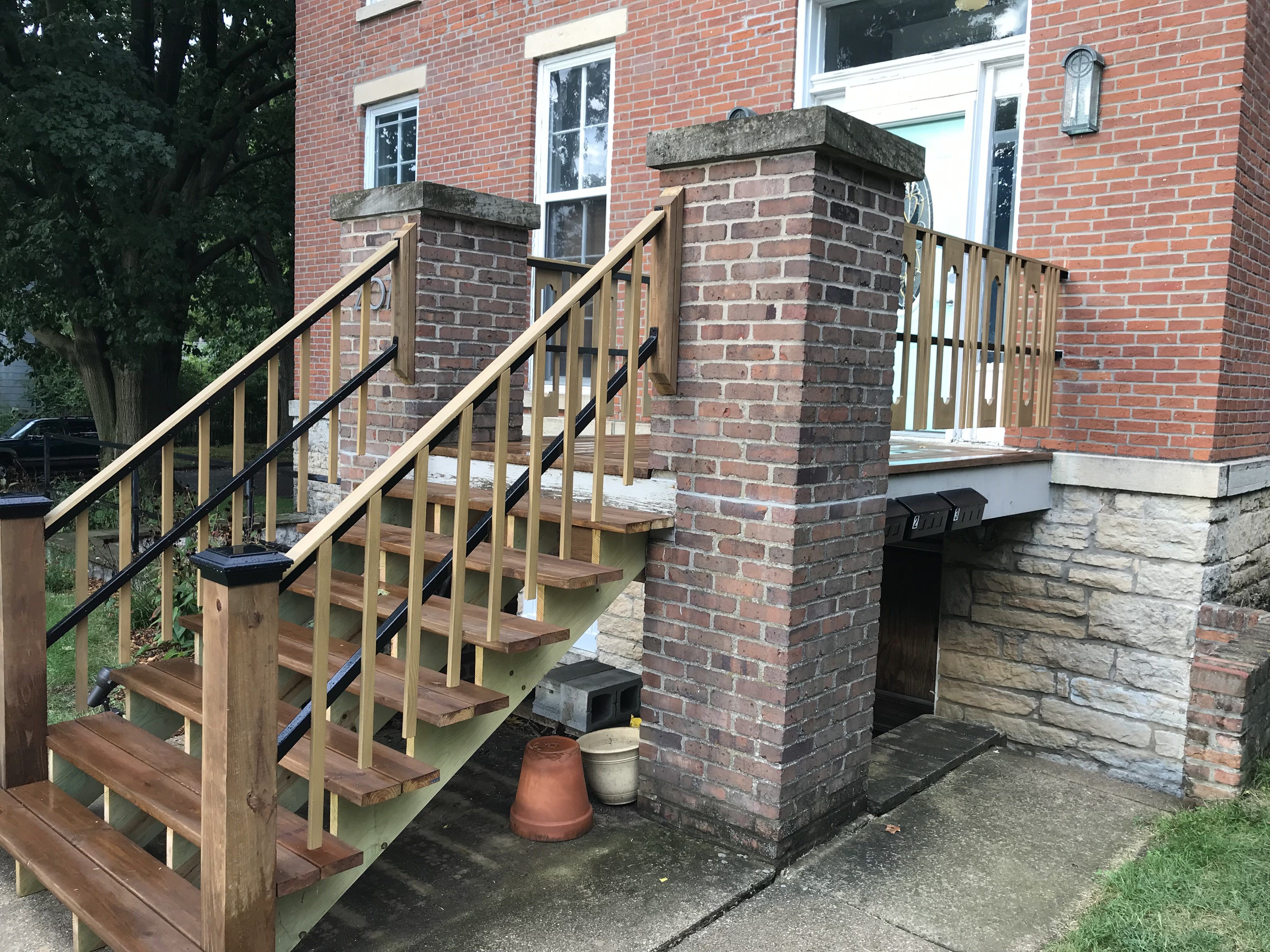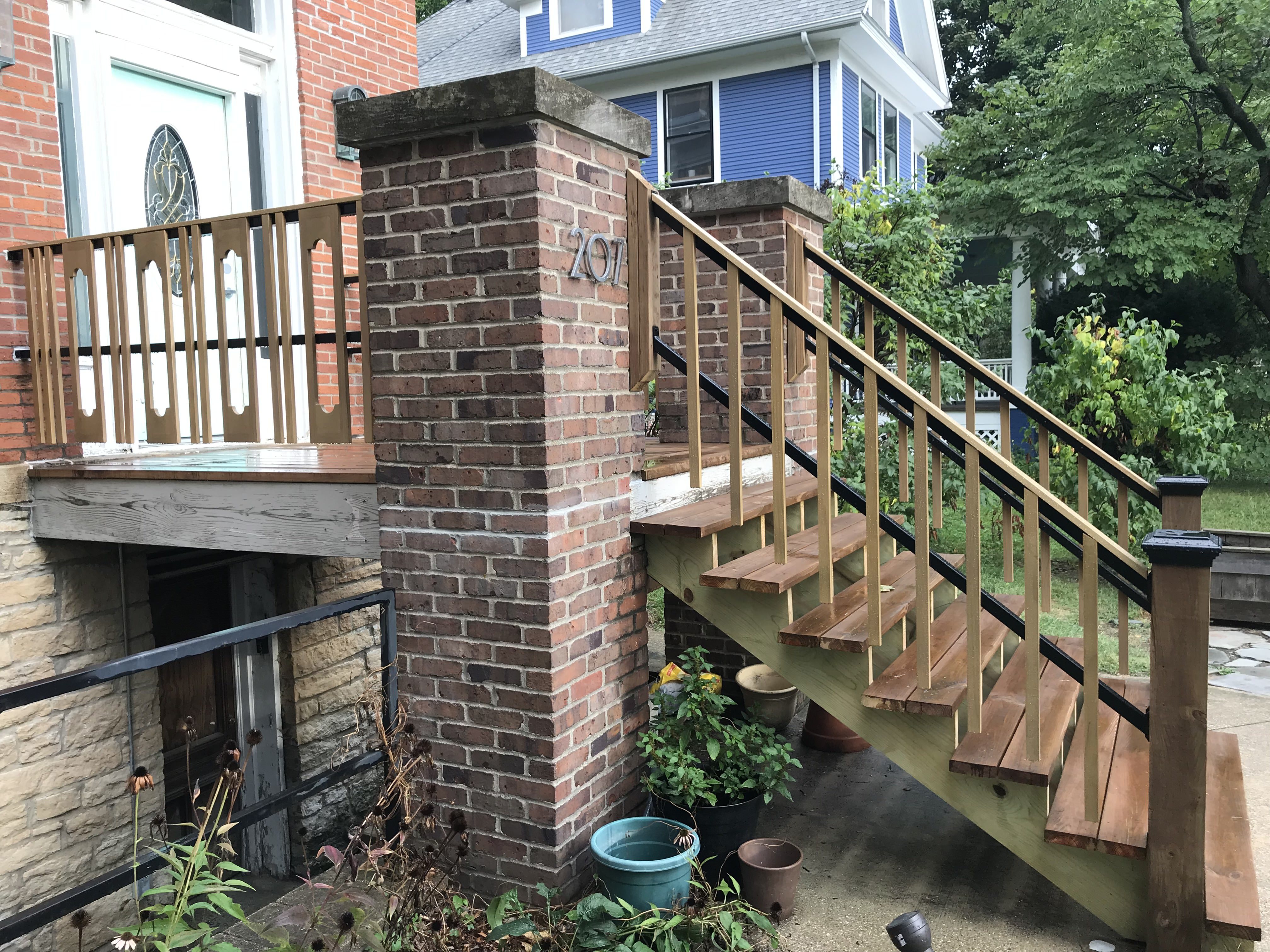
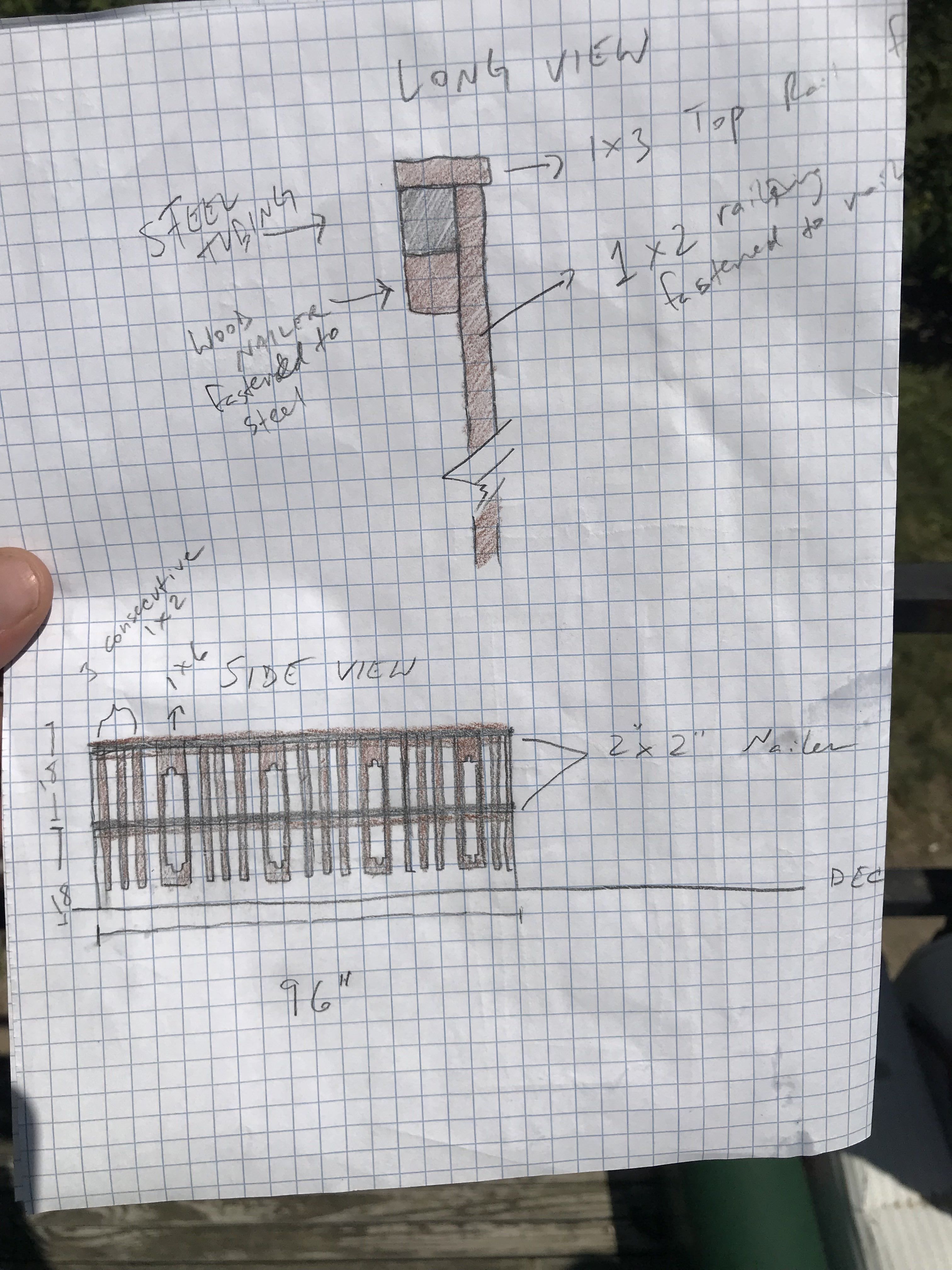
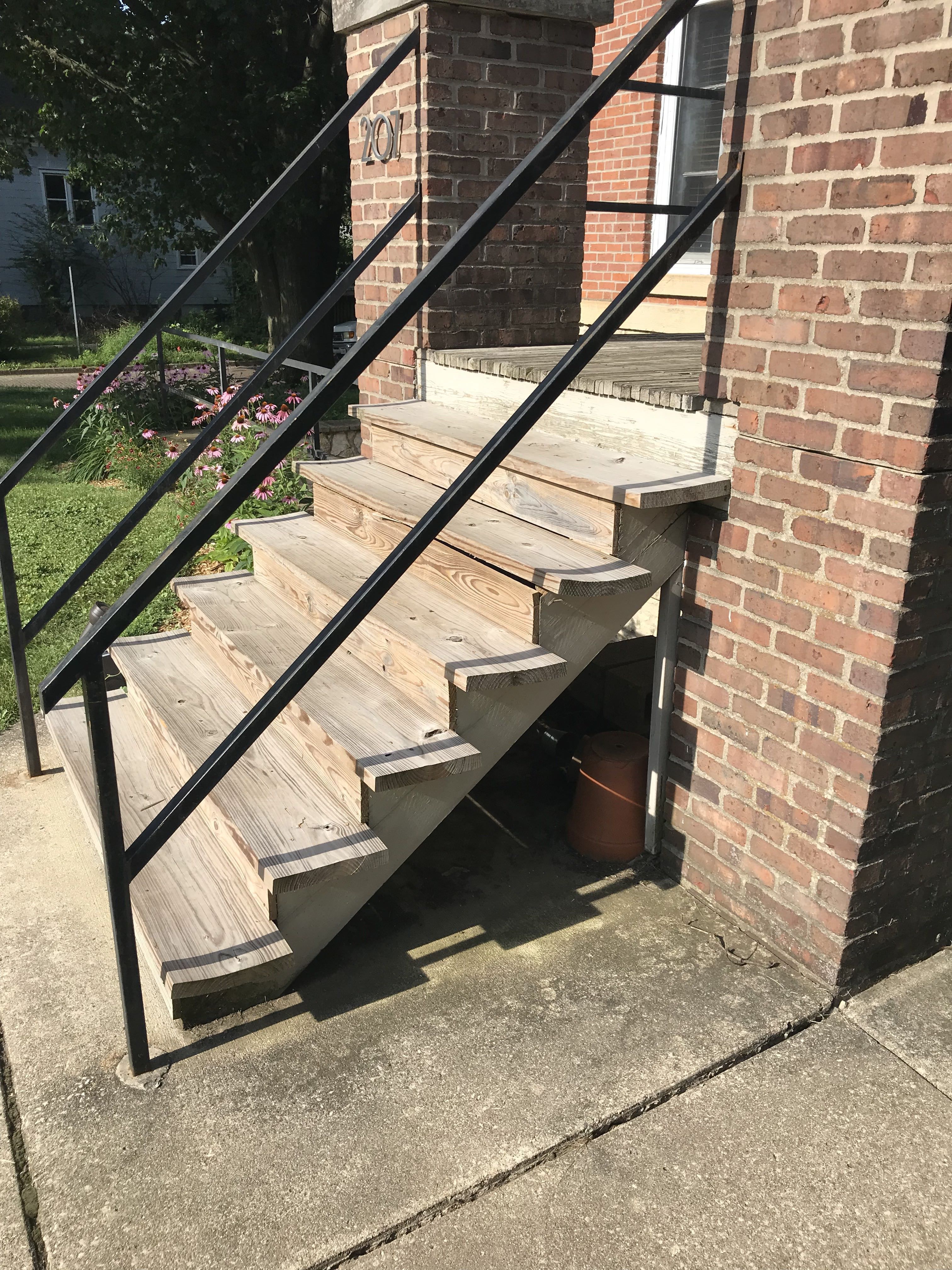
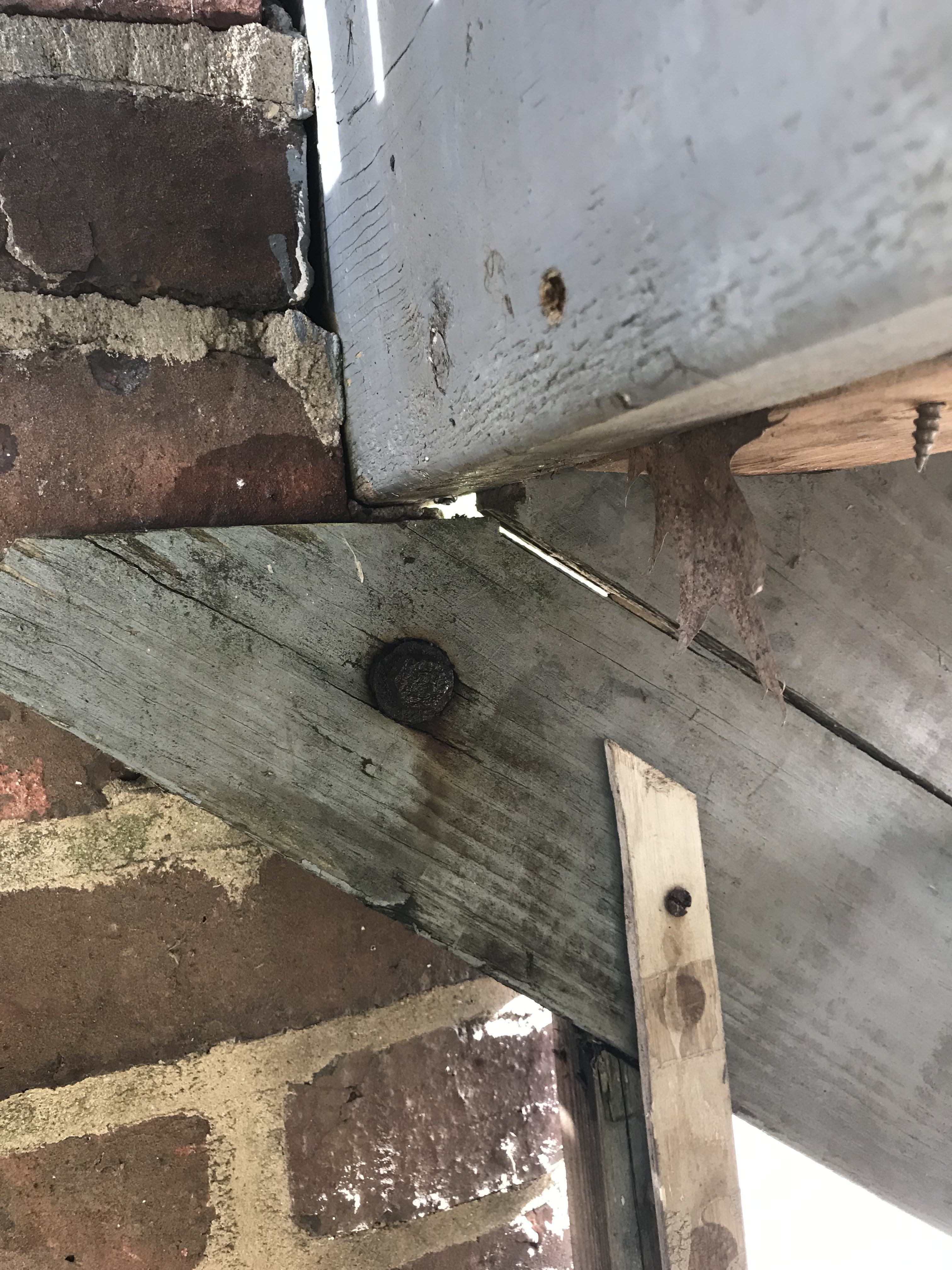
The first step was a to contact furniture maker, Allen Strong (https://www.instagram.com/stronghaven_design/), as I had a notion of what I wanted to do but sought expertise on how to fabricate and assemble. After settling on a drawing that met my needs to incorporate the style and vintage of the building, along with the need to add safety features and long-lasting use, we sub-divided duties. I set to work constructing a new set of stairs and decked landing; while Allen set to work on restoring the steel tubing (for re-use) and fabricating hand-crafted pine balusters to fasten to the tubing. You might wonder whether re-using 2" square tubing is really "period correct" on a late 19th century Italianate... you'd be right in querying such things. However, a passerby said it best while admiring this restoration: "People overdo it in the States with historic buildings. Europe figured out long ago that in order for a building to be appreciated over generations it must be "used" and that means adapting use, materials, and design features in order to stay relevant. Otherwise, it will either rot or become a museum, both of which reduce the number of historic properties". I'm not sure I agree with the entire analogy but it's re-stating here serves purpose. I'll continue to think on that. In any event, the economics of discarding steel tubing that simply needed new top-coating was too much to resist. So it made it's way into the final project. Here's a "before" picture and a sketch of how it would go together:
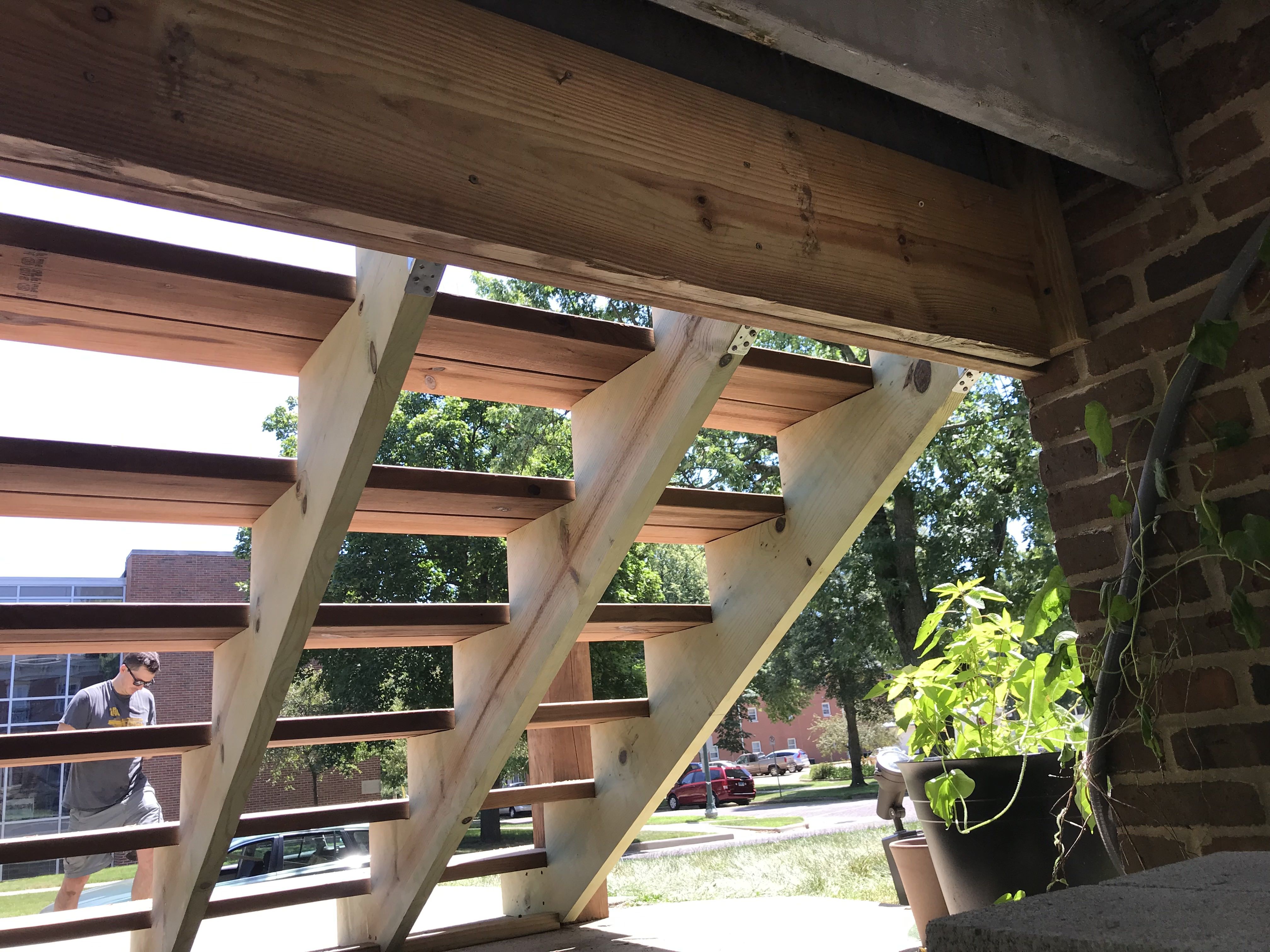
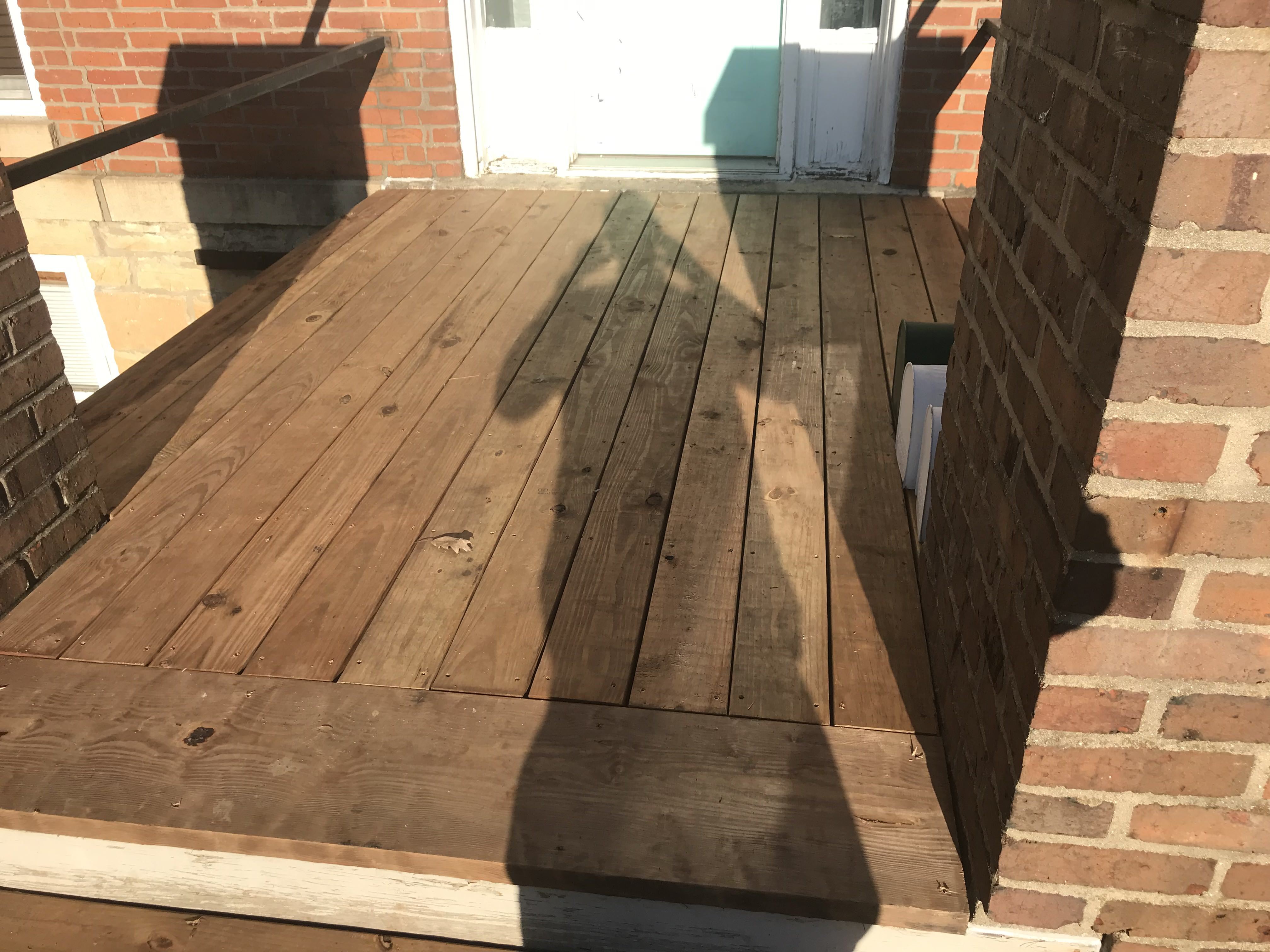
The new stair stringers were cut with a 7.5" rise over an 11" inch run. This is a much more comfortable step than the outgoing stringers of 9" rise over a 10.5" run. I also added a 4th stringer (18" apart). The new grade of the stairs plus the 4th stringer will make the stairs safer and easier to navigate for future tenants whilst moving; in addition to the occasional need to replace heavy appliances such as a refrigerator since this is the building's main point of ingress and egress. The stringers were flush mounted using modern Simpson stringer hangers on a ledger of twin 2x12s. They rest nice and level which balances the load and will allow these stairs to last as long as the materials permit without premature failure (treated pine, kiln dried, factory stained after drying). Here is a look at the finished stairs and landing:
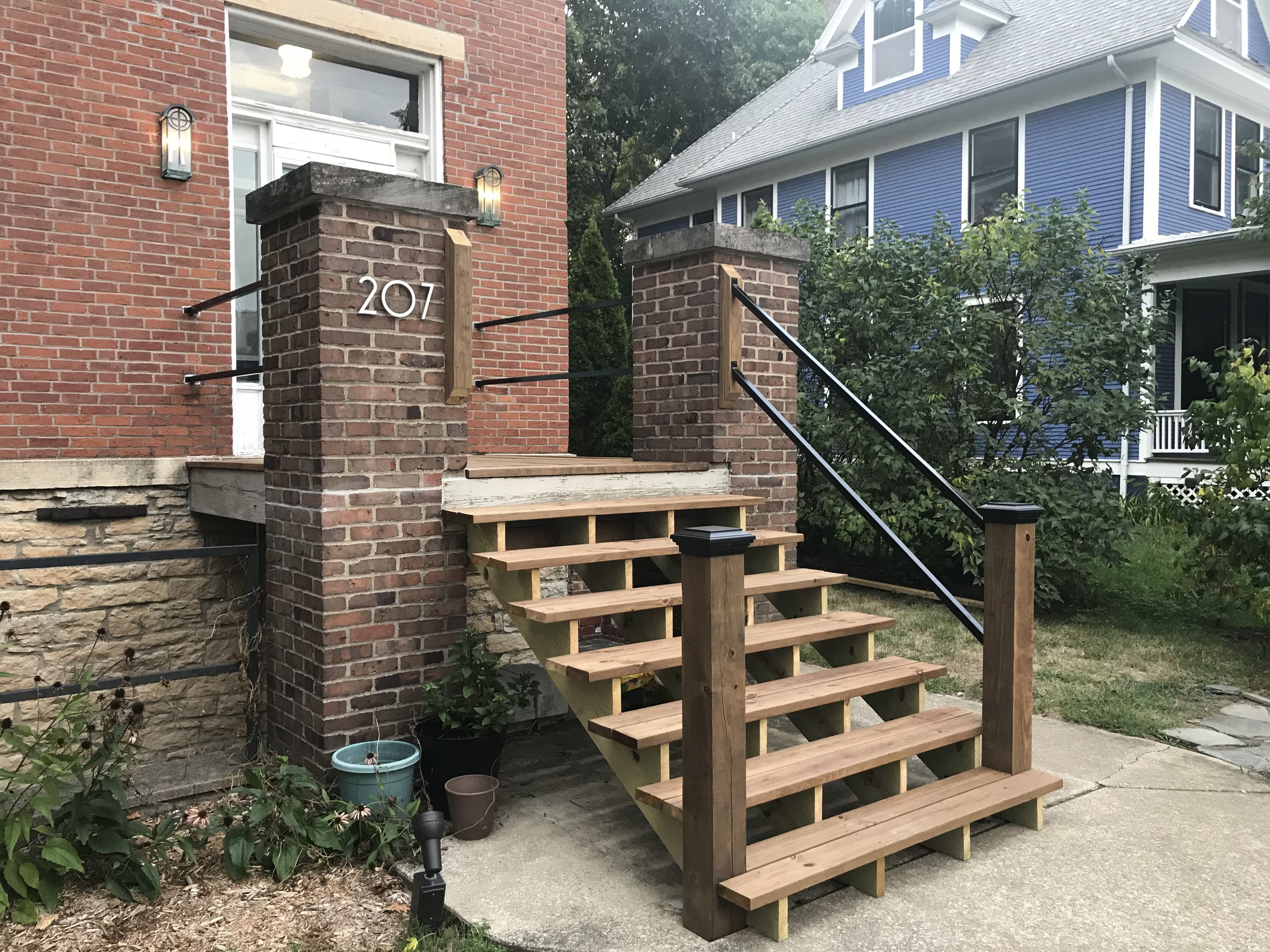
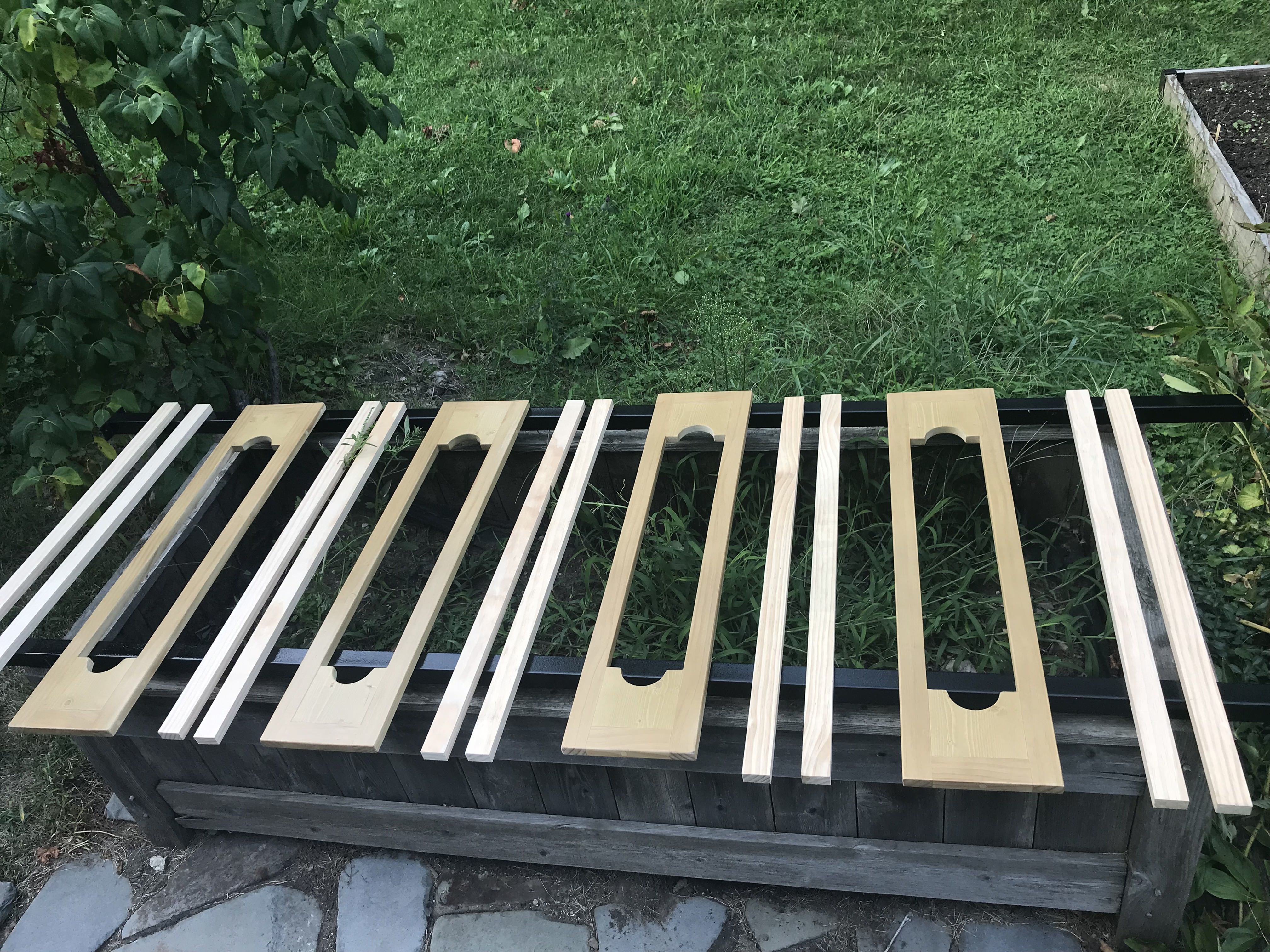
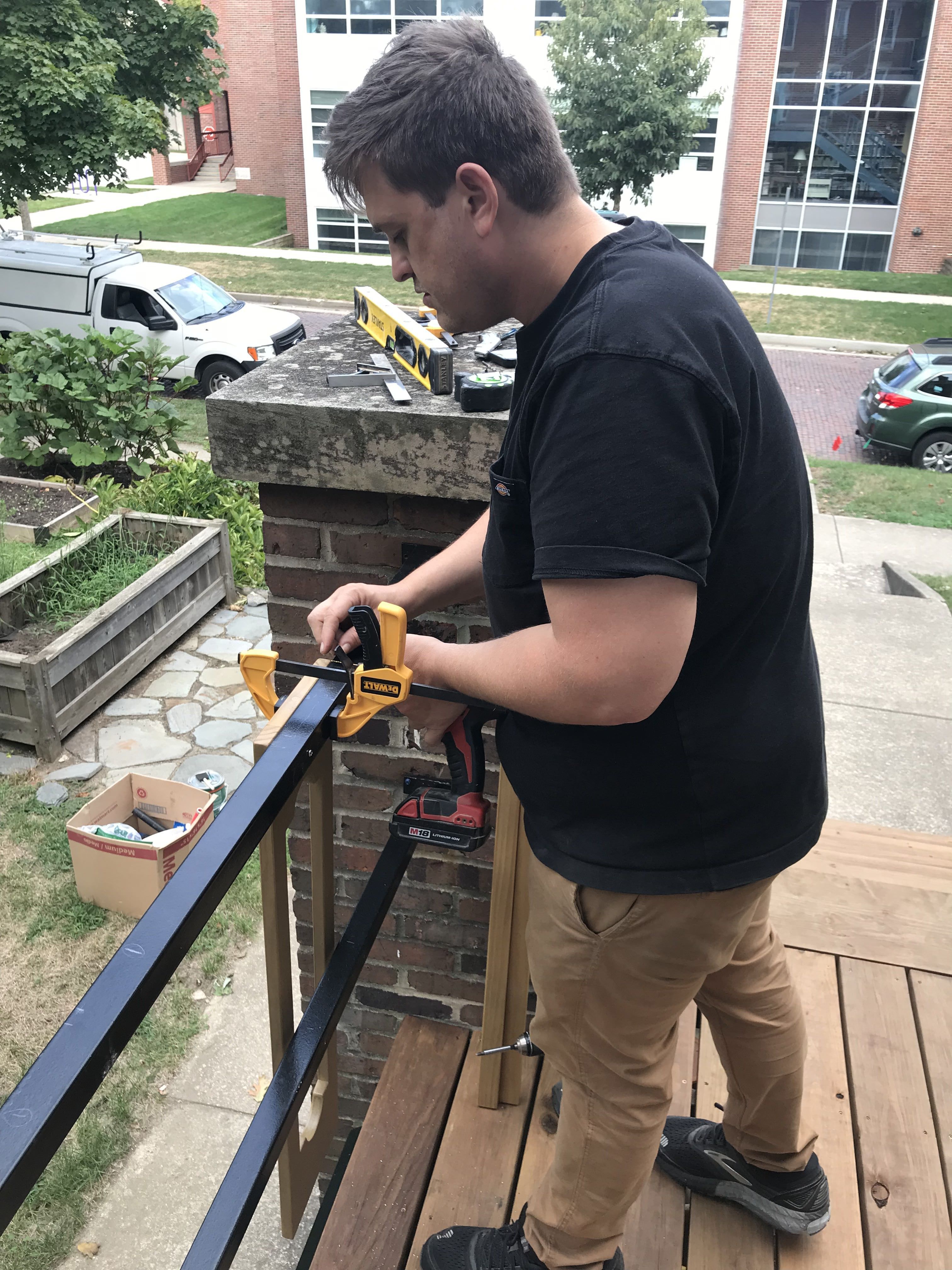
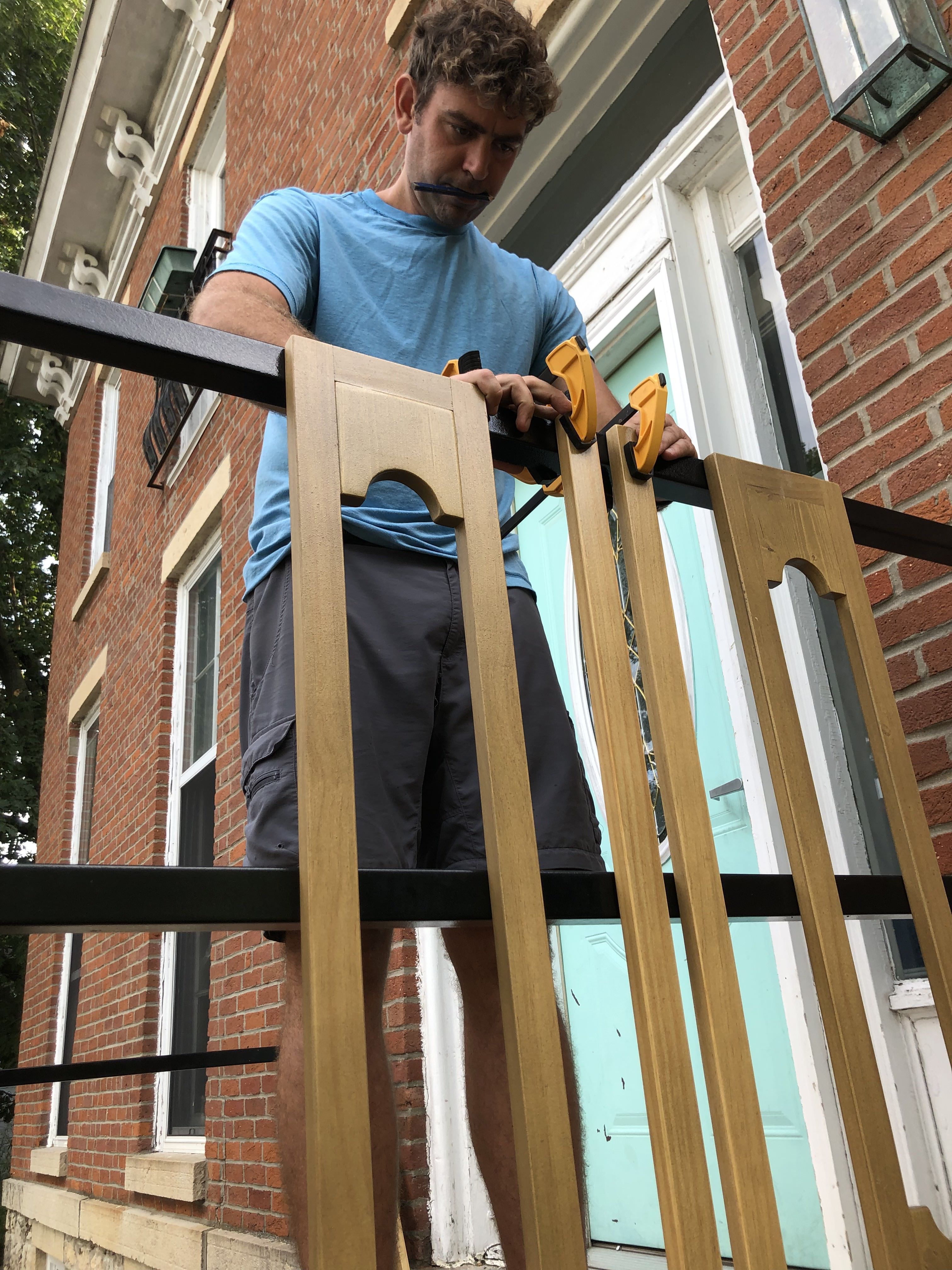
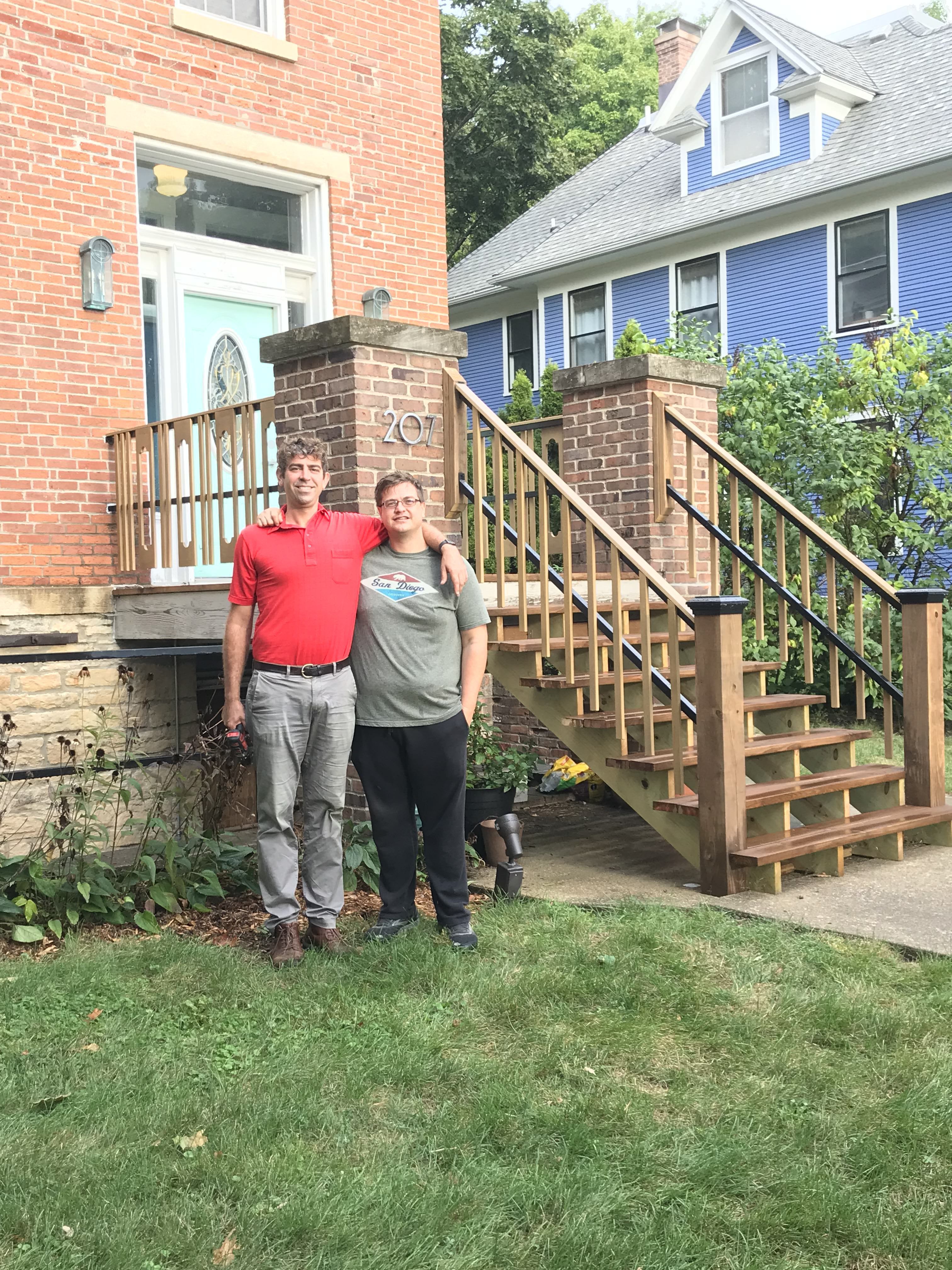
Here comes the fun part: Allen breathed life into the drawings by refinishing the steel tubing and hand making the balusters. The design drew inspiration from some of the home's features. A boxy and symmetrical quality defines many Italianates; not unlike cubism or brutalism. However, since Italianate's are ornate, and brutalism is not, we are free to have as much fun with circles as our hearts and minds can muster. Units 1 and 2 also feature archways overhead as well as the elongated oval of the glass in the front door. So it would appear that that least "edgy" geometric shape (or is in the "most edgy"?) is fair game for our purposes. Four rectangular balusters with complementary archways on the tops and bottoms set the ornate design for each side of the handrails. The vertical slats add spacing and variation to make the rails safe and help keep the rails from becoming "gaudy"... which would've been the result if every baluster were ornate in my opinion. Each baluster contains 7 top coats; including stains and spar varnish. Allen joined the ornate pieces so as to conceal any fasteners and keep them from becoming offensive to the eye. Also the installation of each baluster concealed the fastening of the wood vertical spindles to the tubing. Of course, Allen painted all of the stainless screw heads after installation so they virtually disappear. I'm not sure I could've been happier with the result. See below: